

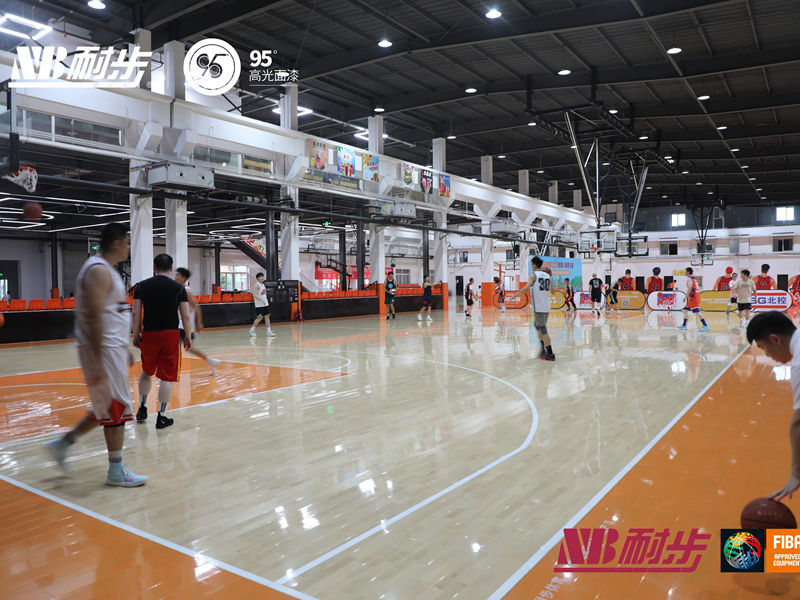
Indoor sports wood flooring is not just a surface for athletes to play on; it's a carefully engineered system designed to optimize performance and safety. The science behind its performance lies in its construction, materials, and the interplay between these elements.
At the heart of indoor sports wood flooring is its multi-layered structure. The top layer, typically made of high-quality hardwood, provides a durable and aesthetically pleasing surface. Beneath this lies a series of sub-layers, including a shock-absorbing underlayment and a stable base layer. These layers work together to distribute impact forces evenly, reducing the risk of injuries and enhancing the playing experience.
The choice of materials is crucial in determining the flooring's performance. Hardwoods like maple and oak are preferred for their strength, durability, and ability to withstand heavy use. The wood's grain pattern and density also play a role in its shock-absorbing properties, with certain grains offering better cushioning than others.
Another scientific aspect of indoor sports wood flooring is its coefficient of friction. This measures the flooring's ability to provide traction, ensuring that athletes can change direction quickly without slipping. Manufacturers carefully control the surface texture and finish to achieve the optimal balance between grip and smoothness.
In summary, the science behind indoor sports wood flooring performance is a complex interplay of construction, materials, and surface properties. By understanding and optimizing these elements, manufacturers can create flooring systems that enhance safety, performance, and the overall playing experience.
Leave a Reply