

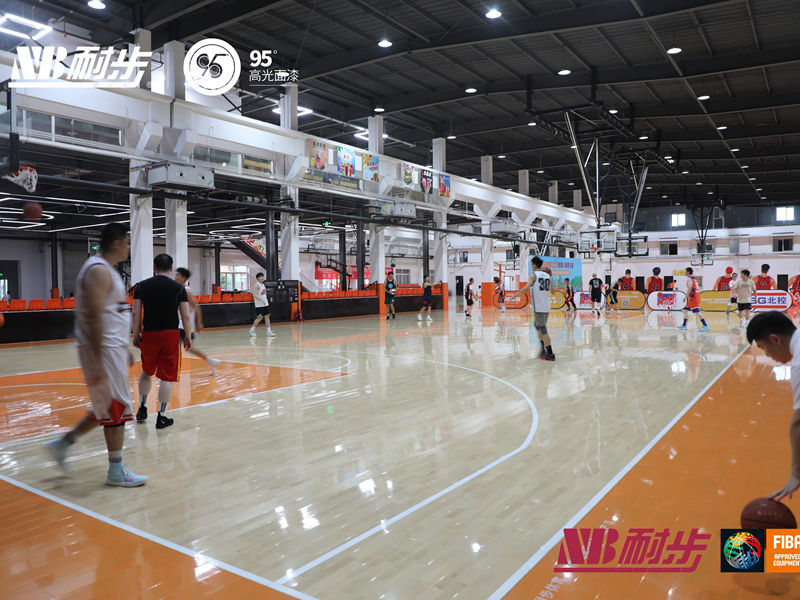
Basketball wooden floors are more than just a pretty face; they are the result of careful engineering and scientific research. The choice of materials, construction methods, and finishing techniques all play a crucial role in determining the floor's performance characteristics.
At the heart of any basketball wooden floor is the wood itself. Maple is the most commonly used species due to its exceptional hardness and durability. However, not all maple is created equal. Manufacturers carefully select logs based on their grain pattern, density, and moisture content to ensure consistent quality across the floor. The wood is then kiln-dried to remove excess moisture, preventing warping and cracking over time.
The construction of a basketball wooden floor typically involves multiple layers. The base layer, often made of plywood or oriented strand board (OSB), provides stability and support. Above this, a layer of shock-absorbing material, such as rubber or foam, helps to reduce the impact on players' joints and muscles. The top layer, or wearing surface, is made of solid maple planks that are carefully fitted together to create a seamless playing area.
Finishing techniques are also critical to the performance of a basketball wooden floor. A high-quality finish not only enhances the floor's appearance but also provides protection against scratches, stains, and moisture damage. Many modern finishes incorporate anti-slip properties to improve traction and reduce the risk of slips and falls.
Understanding the science behind basketball wooden floors helps us appreciate the complexity and precision involved in creating these high-performance surfaces. By selecting the right materials, employing advanced construction methods, and applying the latest finishing techniques, manufacturers can ensure that basketball players have access to safe, durable, and visually appealing playing environments.
Leave a Reply