

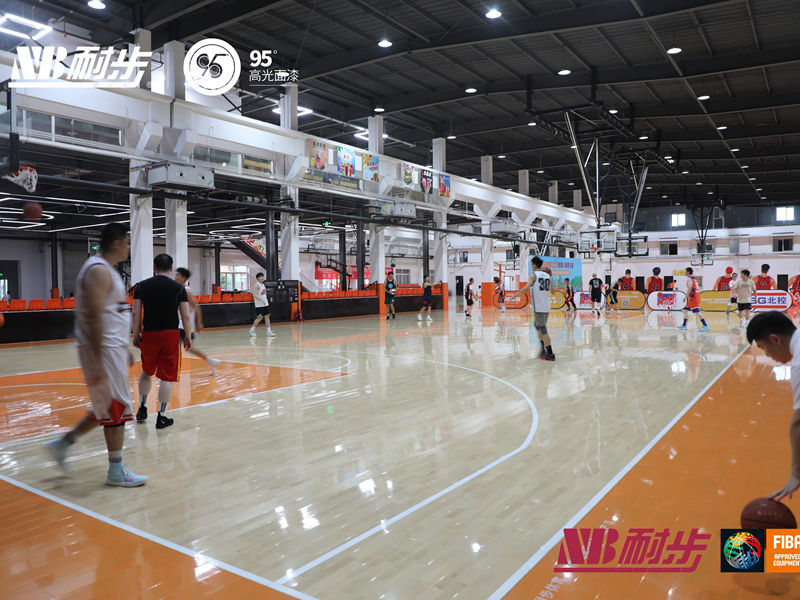
Basketball wood flooring is not just a surface; it's a carefully engineered system designed to meet the specific needs of the sport. The choice of materials, construction techniques, and finishing processes all play crucial roles in determining the floor's performance characteristics. The most commonly used wood for basketball floors is maple, prized for its hardness, durability, and uniform grain pattern. Maple's dense structure provides excellent shock absorption and resilience, making it ideal for the high-impact nature of basketball.
The construction of basketball wood flooring involves multiple layers, each serving a specific purpose. The base layer, often made of plywood or oriented strand board (OSB), provides stability and support. Above this, a layer of maple planks is installed, with each plank carefully selected for its quality and consistency. These planks are then sanded, stained, and finished to create a smooth, even surface that enhances traction and reduces the risk of slips and falls.
The finishing process is critical in ensuring the longevity and performance of basketball wood flooring. High-quality finishes, such as polyurethane or acrylic, are applied to protect the wood from moisture, scratches, and wear. These finishes also enhance the floor's aesthetic appeal, giving it a glossy, professional look. Additionally, some manufacturers incorporate anti-microbial properties into their finishes, helping to maintain a hygienic playing environment.
Leave a Reply