

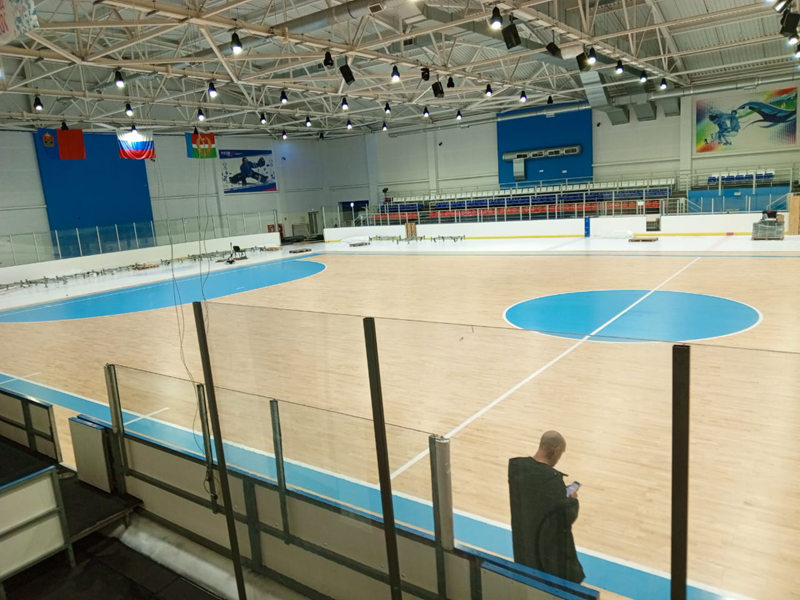
Friction is a fundamental property of indoor sports flooring that significantly impacts athletic performance and safety. The right amount of friction ensures that athletes can maintain their footing during rapid movements, reducing the risk of slips and falls. However, too much friction can impede movement and increase the likelihood of injuries, such as strains and sprains.
Indoor sports flooring manufacturers carefully control the friction levels of their products to strike the optimal balance. This is achieved through a combination of surface texture and material selection. For example, a basketball court might have a slightly rougher texture to provide better grip for players making quick cuts and jumps, while a volleyball court might have a smoother surface to facilitate quick lateral movements.
The coefficient of friction (COF) is a key metric used to measure the frictional properties of sports flooring. A COF that is too low can result in a slippery surface, while a COF that is too high can make it difficult for athletes to change direction quickly. Manufacturers conduct extensive testing to determine the ideal COF for each type of sport, ensuring that their flooring meets the specific needs of athletes.
In addition to enhancing safety and performance, the right friction levels can also extend the lifespan of sports flooring by reducing wear and tear caused by excessive sliding or scraping. By carefully controlling friction, manufacturers have created flooring solutions that can withstand the rigors of competitive sports while providing a safe and enjoyable playing experience.
Leave a Reply