

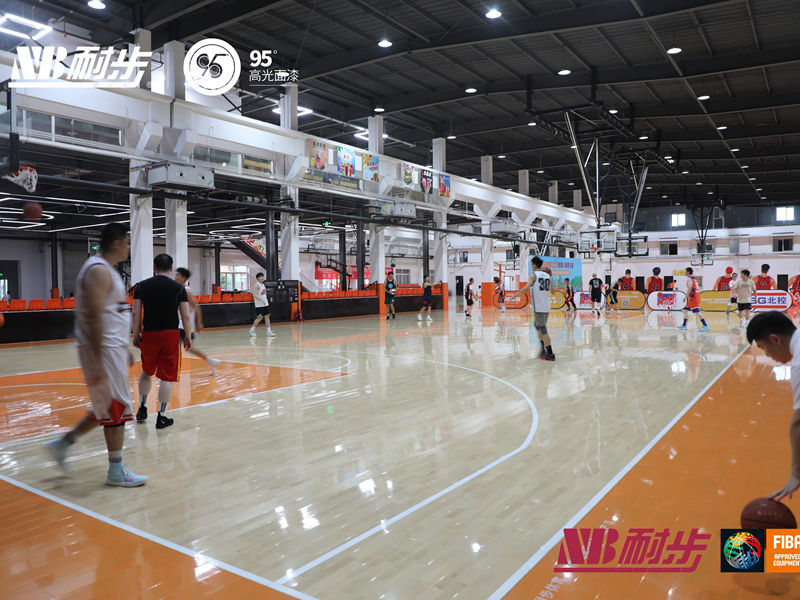
Shock absorption is a critical factor in the design and selection of indoor sports flooring. When athletes engage in high-impact activities such as jumping, running, and pivoting, their joints and muscles are subjected to significant stress. A floor with poor shock absorption can exacerbate this stress, leading to fatigue, discomfort, and even injuries over time.
Effective shock absorption in indoor sports flooring helps to distribute the impact forces generated during athletic activities, reducing the strain on the body. This is achieved through the use of materials and construction techniques that absorb and dissipate energy, rather than transmitting it directly to the athlete's body.
Rubber is one of the most commonly used materials for shock absorption in sports flooring. Its elastic properties allow it to compress and rebound, effectively absorbing impact forces and providing a cushioned surface for athletes. Vinyl and polyurethane floors can also incorporate shock-absorbing layers, often in the form of foam or rubber underlays, to enhance their performance.
In addition to protecting athletes from injury, shock absorption also contributes to overall comfort and performance. A floor that absorbs shock effectively can reduce fatigue, allowing athletes to maintain their energy levels and focus for longer periods. This can be particularly beneficial in competitive settings where every advantage counts.
When selecting indoor sports flooring, it is essential to consider the level of shock absorption required for the specific sport or activity. Different sports have different impact requirements, and choosing a floor that meets these needs can help to ensure the safety and performance of athletes.
Leave a Reply