

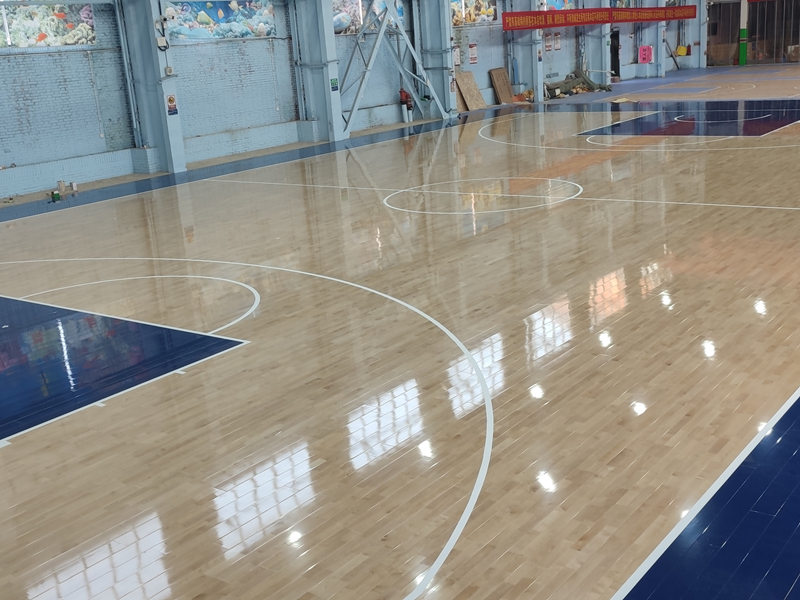
The use of wood flooring in indoor basketball courts has a rich history that dates back to the early days of the sport. Understanding this history can provide insights into the evolution of basketball court design and the reasons why wood flooring has become the standard choice.
Basketball was invented in 1891 by Dr. James Naismith, and the first games were played on gymnasium floors made of various materials, including hardwood. In the early years, the focus was more on the game itself rather than the specific type of flooring. However, as the sport grew in popularity and became more competitive, the need for a high - quality playing surface became apparent.
In the mid - 20th century, maple wood emerged as the preferred material for basketball court flooring. Maple's hardness, durability, and aesthetic appeal made it an ideal choice for the demanding requirements of the sport. The development of better wood - processing techniques and finishing methods also contributed to the widespread adoption of maple flooring.
Over time, the design and construction of wooden basketball court floors have evolved to improve their performance and safety. The introduction of multi - layer structures, such as the floating floor system, has enhanced the shock - absorbing capabilities of the floor. These systems typically consist of a sub - floor, an intermediate layer for shock absorption, and a top layer of hardwood.
In recent years, there have been advancements in wood flooring technology, including the development of more environmentally friendly finishes and the use of sustainable wood sources. These developments reflect the growing awareness of environmental issues in the sports industry and the desire to create more sustainable sports facilities.
Today, wood flooring remains the dominant choice for indoor basketball courts around the world. Its long - standing history and proven performance have made it an integral part of the basketball experience, from local community courts to professional arenas.
Leave a Reply