

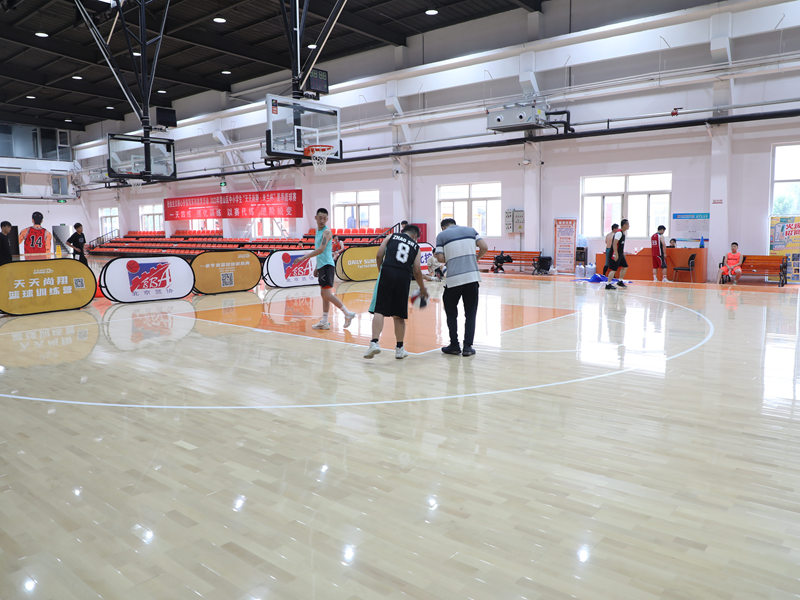
The future of indoor sports flooring is shaped by ongoing trends and innovations that aim to improve performance, safety, sustainability, and user experience. Here are some of the key trends and innovations that are expected to shape the future of sports flooring:
Smart Flooring Technology: Smart flooring technology is emerging as a new trend in the sports flooring industry. This technology incorporates sensors and data analytics to monitor athlete performance, track movement patterns, and provide real-time feedback. Smart floors can help athletes improve their skills, prevent injuries, and optimize their training regimens. Additionally, smart flooring can also be used for facility management purposes, such as monitoring foot traffic, detecting maintenance issues, and optimizing energy usage.
Sustainable Materials: As sustainability becomes an increasingly important consideration for facility owners and managers, the demand for sustainable sports flooring materials is expected to grow. Manufacturers are developing new materials that are made from recycled content, rapidly renewable resources, or biodegradable materials. These sustainable materials not only reduce the environmental impact of sports flooring but also offer comparable performance and durability to traditional materials.
Customization and Personalization: With the rise of personalized sports training and experiences, the demand for customized and personalized sports flooring is also increasing. Facility owners can now choose from a wide range of colors, patterns, and textures to create a unique and branded sports floor that reflects their facility's identity and values. Additionally, some manufacturers offer custom-designed sports floors that incorporate logos, team names, or other personalized elements.
Improved Shock Absorption and Energy Return: Researchers and manufacturers are continuously working to improve the shock absorption and energy return properties of sports flooring. By developing new materials and construction techniques, they aim to provide athletes with a safer, more supportive, and more responsive surface for physical activities. Improved shock absorption can help reduce the risk of injuries, while enhanced energy return can help athletes generate more power and speed during their movements.
Virtual and Augmented Reality Integration: Virtual and augmented reality (VR/AR) technology is also being integrated into sports flooring to create immersive and interactive training experiences. By combining VR/AR headsets with smart flooring technology, athletes can practice their skills in a virtual environment that simulates real-world conditions. This can help athletes improve their decision-making, reaction time, and spatial awareness, leading to better performance on the actual sports field.
In conclusion, the future of indoor sports flooring is bright and full of exciting possibilities. With ongoing trends and innovations in smart technology, sustainable materials, customization, shock absorption, and VR/AR integration, sports flooring is evolving to provide athletes with a safer, more supportive, and more engaging environment for physical activities.
Leave a Reply