

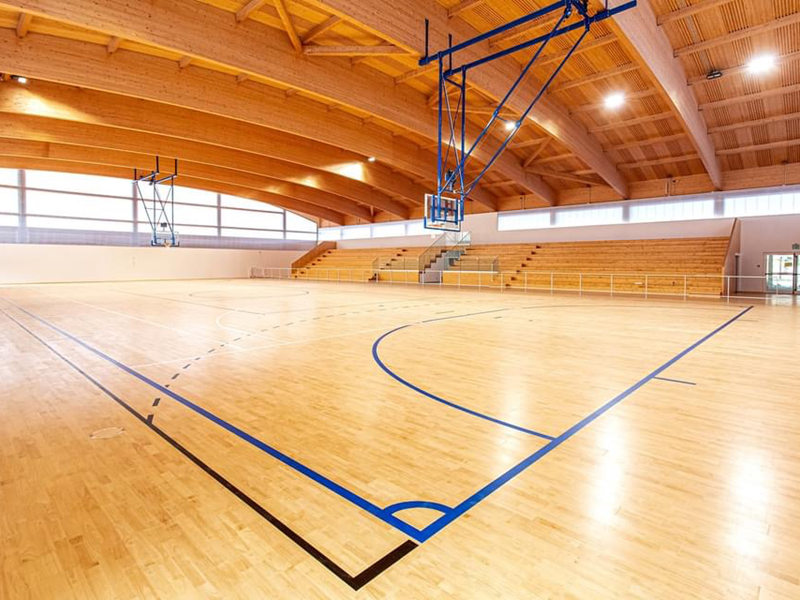
Sports wood flooring has undergone a remarkable transformation over the years, evolving from simple wooden planks to sophisticated, high-performance surfaces designed to meet the rigorous demands of modern sports. Traditionally, sports floors were constructed using solid hardwood, such as maple or oak, which provided a durable and aesthetically pleasing surface. However, these early floors had limitations, including susceptibility to moisture damage and a lack of shock absorption, which could lead to player fatigue and injuries.
Today, sports wood flooring incorporates advanced engineering techniques and materials to enhance performance and safety. Modern systems often feature a multi-layer design, with a hardwood top layer bonded to a subfloor made of plywood or other composite materials. This structure provides improved stability, shock absorption, and resilience, allowing athletes to perform at their best while minimizing the risk of injury. Additionally, advancements in finishing technologies have led to the development of low-maintenance, scratch-resistant coatings that extend the lifespan of the floor and maintain its appearance over time.
The evolution of sports wood flooring has also been driven by the changing needs of athletes and sports facilities. As sports have become more competitive and physically demanding, the demand for floors that can withstand heavy use and provide optimal playing conditions has increased. Manufacturers have responded by developing specialized flooring systems for different sports, such as basketball, volleyball, and gymnastics, each tailored to meet the unique requirements of the game.
In conclusion, the evolution of sports wood flooring reflects the ongoing pursuit of excellence in sports performance and safety. From traditional hardwood to modern, high-tech solutions, sports floors have come a long way, and the future promises even more innovations to enhance the athletic experience.
Leave a Reply