

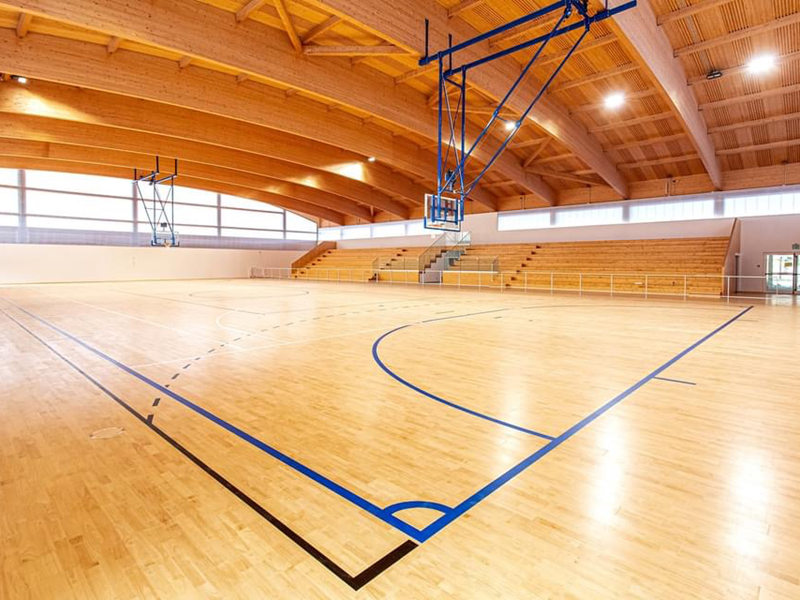
Sports wood flooring has undergone a remarkable transformation over the centuries, evolving from simple wooden planks to sophisticated, high-performance surfaces designed to meet the rigorous demands of modern sports. Traditionally, sports floors were made from locally sourced timber, often oak or maple, laid directly onto a concrete or dirt base. These early floors were prone to warping, cracking, and unevenness, posing risks to athletes and limiting the types of sports that could be played safely.
The advent of engineered wood flooring marked a significant turning point in the history of sports surfaces. Engineered wood, composed of multiple layers of wood veneer bonded together with adhesives, offered enhanced stability, durability, and resistance to moisture and temperature fluctuations. This innovation allowed for the creation of uniform, flat surfaces that could withstand heavy foot traffic and intense physical activity without compromising safety or performance.
Modern sports wood flooring systems incorporate advanced technologies such as shock absorption layers, moisture barriers, and anti-slip coatings. These features not only enhance the playing experience but also reduce the risk of injuries by providing optimal traction and cushioning. Additionally, the use of sustainable materials and eco-friendly manufacturing processes has become increasingly important, reflecting a growing awareness of environmental responsibility in the sports industry.
Today, sports wood flooring is a critical component of any professional or recreational sports facility, offering a blend of functionality, aesthetics, and sustainability that meets the diverse needs of athletes and spectators alike.
Leave a Reply