

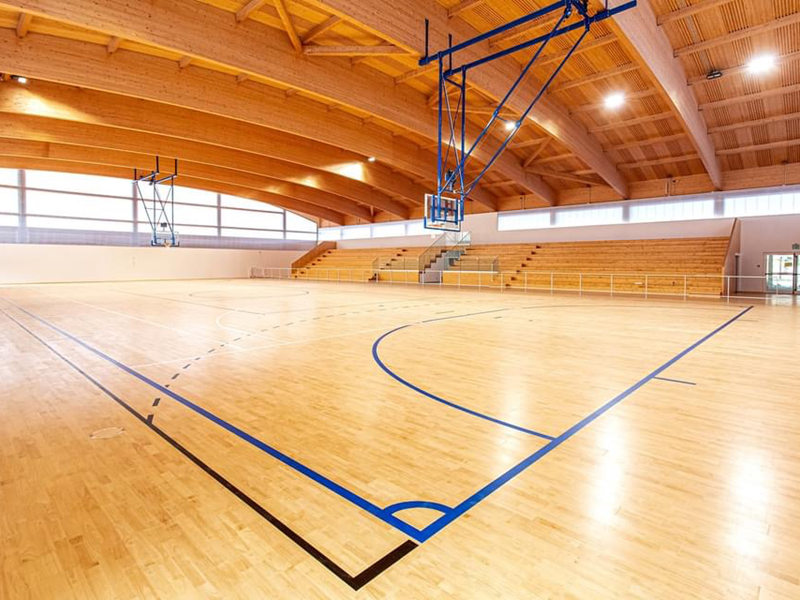
Sports wood flooring has undergone a remarkable transformation over the years, evolving from simple wooden planks to highly engineered, performance-oriented surfaces. Traditionally, sports floors were made from solid hardwood, such as maple or oak, which provided a durable and aesthetically pleasing surface. However, these early floors lacked the shock absorption and resilience needed for high-impact sports, leading to increased injuries and reduced player comfort.
The introduction of engineered wood flooring revolutionized the industry. By layering different types of wood and incorporating advanced adhesives, manufacturers were able to create floors that offered superior stability, shock absorption, and energy return. These modern floors are designed to withstand the rigors of intense athletic activity while providing a safe and comfortable playing surface.
Today, sports wood flooring is available in a variety of finishes and colors, allowing facilities to customize their floors to match their branding or aesthetic preferences. Additionally, advancements in installation techniques, such as floating floors and subfloor systems, have further improved the performance and longevity of sports wood flooring.
Leave a Reply