

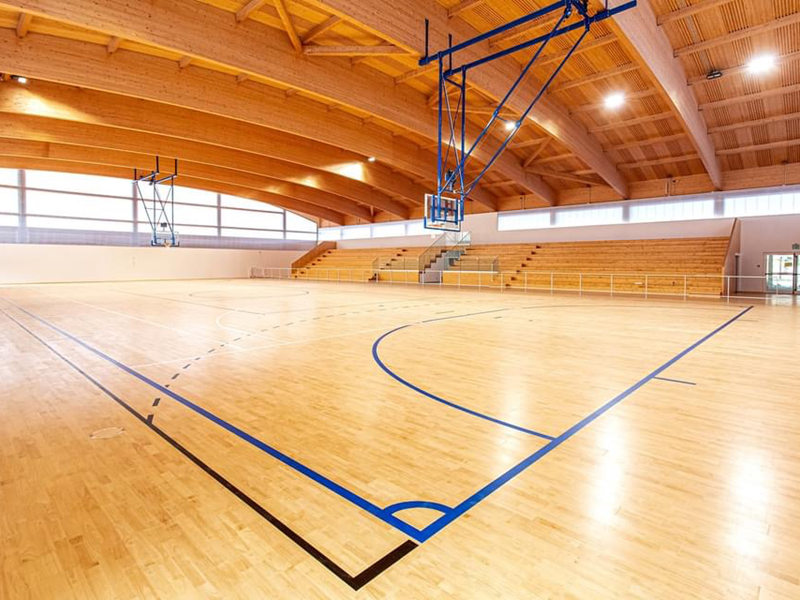
Indoor sports wood flooring has undergone a remarkable transformation over the centuries, evolving from simple wooden planks to sophisticated, engineered systems designed to meet the rigorous demands of modern sports. The journey began in ancient times when wooden floors were used in gymnasiums and arenas for activities like wrestling and ball games. These early floors were often rough and uneven, lacking the shock absorption and durability required for high-impact sports.
As sports became more organized and competitive, the need for better flooring became apparent. In the mid-20th century, the introduction of maple wood as the primary material for sports floors marked a significant milestone. Maple, known for its hardness, stability, and aesthetic appeal, quickly became the gold standard for basketball courts, volleyball courts, and other indoor sports venues. Its tight grain structure and resistance to wear made it ideal for withstanding the constant pounding of athletes' feet and the scuffing of sports equipment.
Today, indoor sports wood flooring has reached new heights of sophistication. Modern systems incorporate advanced engineering techniques, such as multi-layer construction with shock-absorbing underlays and resilient surface finishes. These innovations not only enhance the performance and safety of athletes but also extend the lifespan of the flooring, reducing maintenance costs and downtime for repairs. Furthermore, the aesthetic design of sports floors has become a crucial aspect, with customizable colors, logos, and patterns allowing venues to create a unique and inviting atmosphere for spectators and participants alike.
The evolution of indoor sports wood flooring reflects the broader trends in sports technology and facility management. As sports continue to grow in popularity and commercialization, the demand for high-quality, durable, and visually appealing flooring will only increase. The future of sports flooring lies in continuous innovation, with a focus on sustainability, energy efficiency, and smart technologies that can monitor and adjust floor conditions in real-time to optimize performance and safety.
Leave a Reply