

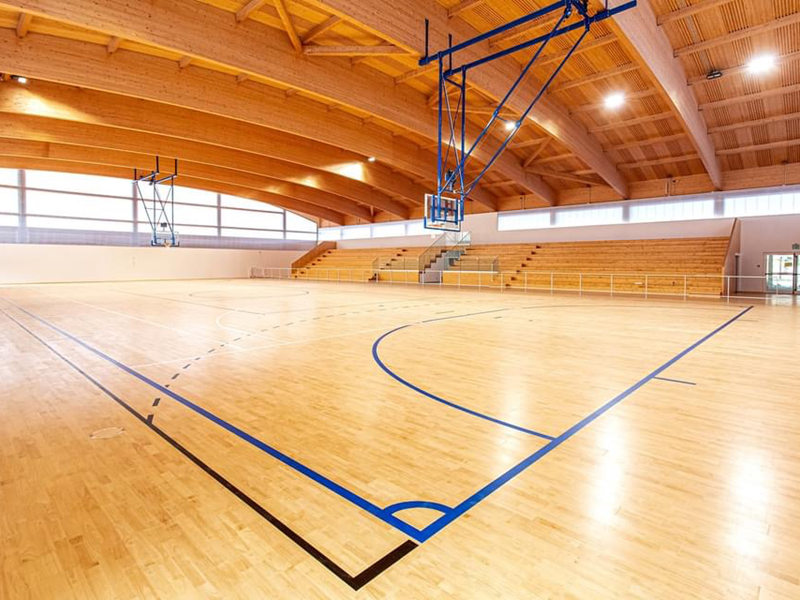
Indoor sports flooring has undergone a remarkable transformation over the years, evolving from simple wooden planks to sophisticated, multi-layered systems designed to enhance performance, safety, and durability. The journey began with basic wooden floors, which provided a solid surface for various sports activities but lacked the necessary shock absorption and resilience. As sports became more competitive and the understanding of biomechanics improved, the need for better flooring solutions became evident.
Modern indoor sports flooring now incorporates advanced materials such as rubber, vinyl, and polyurethane, each offering unique benefits. Rubber floors, for instance, are known for their excellent shock absorption, making them ideal for high-impact sports like basketball and volleyball. Vinyl floors, on the other hand, provide a smooth, consistent surface that is easy to clean and maintain, while polyurethane floors offer a combination of durability and aesthetic appeal, with a wide range of colors and finishes available.
The evolution of indoor sports flooring has also been driven by technological advancements. Today, many floors feature multi-layered constructions that include shock-absorbing underlays, resilient top layers, and specialized coatings for enhanced grip and slip resistance. These innovations not only improve player safety but also enhance performance by providing optimal traction and energy return.
Furthermore, the development of sustainable and eco-friendly flooring materials has become a priority in recent years. Manufacturers are now using recycled materials and low-VOC (volatile organic compound) finishes to reduce environmental impact and create healthier indoor environments.
In conclusion, the evolution of indoor sports flooring has been a journey of continuous improvement, driven by the need for better performance, safety, and sustainability. As sports continue to evolve, so too will the flooring solutions that support them, ensuring that athletes can perform at their best while minimizing the risk of injury.
Leave a Reply