

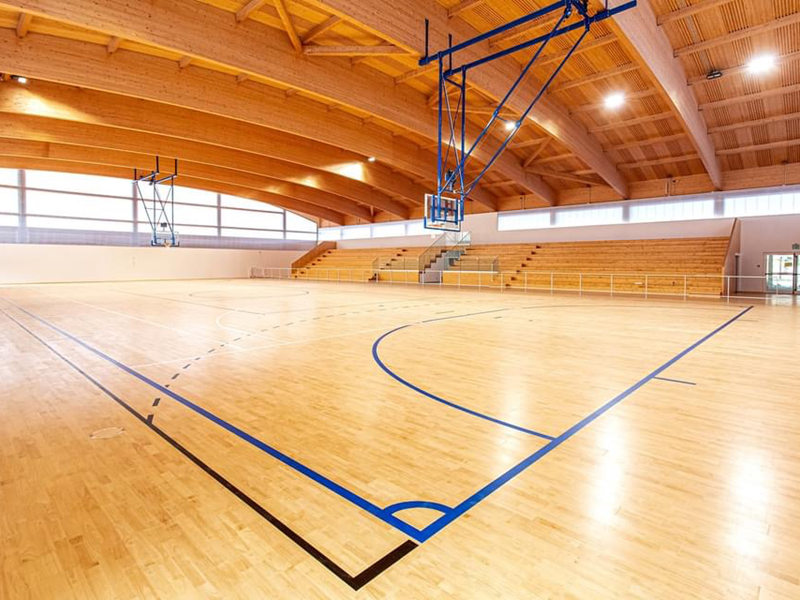
Indoor sports flooring has undergone a remarkable transformation over the years, evolving from simple wooden planks to sophisticated, high-performance surfaces designed to enhance athletic performance and reduce injury risks. Initially, indoor sports were played on basic wooden floors, which, while providing a flat surface, lacked the necessary shock absorption and traction required for modern sports. As sports science progressed, the need for specialized flooring became evident, leading to the development of materials like vinyl, rubber, and synthetic composites.
Today, advanced indoor sports flooring incorporates cutting-edge technologies such as shock-absorbing layers, anti-slip coatings, and energy-return systems. These innovations not only improve player safety by reducing the impact on joints and muscles but also enhance performance by providing optimal traction and responsiveness. For instance, some floors are engineered to have a specific coefficient of friction, ensuring that athletes can make quick turns and stops without slipping. Additionally, the use of eco-friendly materials and sustainable manufacturing processes reflects a growing awareness of environmental responsibility in the sports industry.
The evolution of indoor sports flooring is a testament to the continuous pursuit of excellence in athletic environments. As sports continue to evolve, so too will the flooring solutions, driven by advancements in material science, biomechanics, and sustainability.
Leave a Reply