

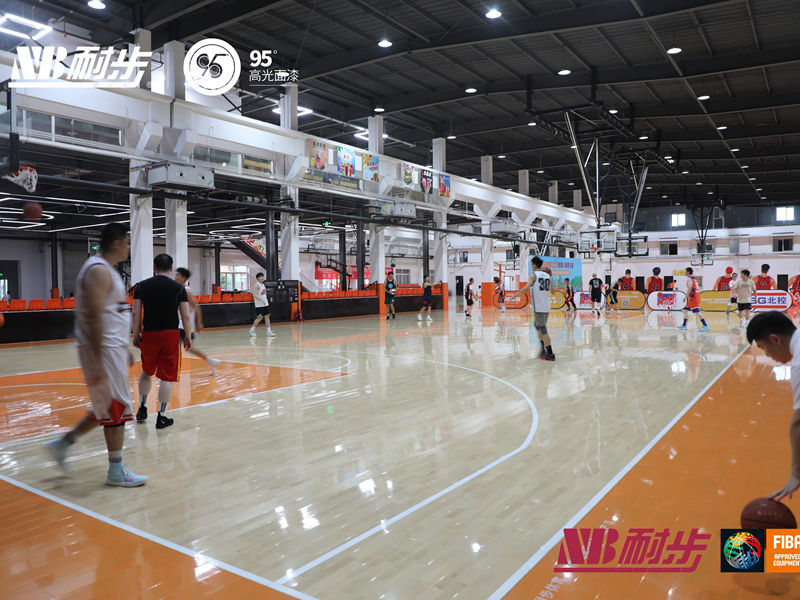
Over the years, basketball wood flooring technology has undergone significant advancements, driven by the need for improved safety, performance, and durability. From simple wooden planks to sophisticated multi-layered systems, the evolution of basketball wood flooring reflects the ongoing commitment to enhancing the sport's infrastructure.
Early basketball floors were often made of single layers of hardwood, which provided limited shock absorption and were prone to warping and cracking. As the sport grew in popularity and intensity, the need for more resilient and durable flooring became apparent. This led to the development of multi-layered flooring systems, incorporating shock-absorbing pads and subfloors to distribute impacts more evenly.
Modern basketball wood flooring now features advanced materials and construction techniques, such as the use of high-density fiberboard (HDF) subfloors and specialized rubber or foam shock pads. These innovations have significantly improved the floor's ability to absorb shock, reducing the risk of injuries to players. Additionally, the use of precision-milled hardwood panels ensures a consistent and level playing surface, enhancing performance and reducing the likelihood of slips and falls.
Another notable advancement in basketball wood flooring technology is the development of eco-friendly and sustainable materials. Many manufacturers now offer flooring options made from responsibly sourced wood and recycled materials, reducing the environmental impact of basketball venues. These sustainable choices not only benefit the planet but also appeal to environmentally conscious consumers and organizations.
In summary, the evolution of basketball wood flooring technology has been driven by a commitment to safety, performance, and sustainability. From simple wooden planks to sophisticated multi-layered systems, basketball floors have come a long way, providing athletes with a safer, more resilient, and environmentally friendly playing surface.
Leave a Reply