

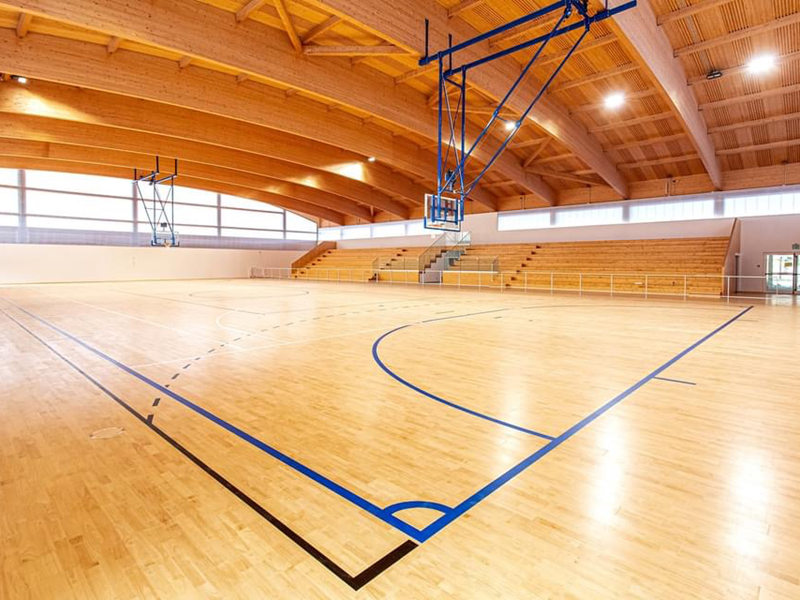
Sports wood flooring has undergone a remarkable evolution over the decades, transforming from simple wooden planks to sophisticated, high-performance surfaces that cater to the diverse needs of athletes and spectators alike. The importance of sports wood flooring in modern arenas cannot be overstated, as it serves as the foundation for countless sporting events, from basketball and volleyball to gymnastics and dance.
Historically, sports wood flooring was primarily made from solid hardwood, such as maple or oak, which provided durability and a natural aesthetic. However, advancements in technology and materials science have led to the development of engineered wood flooring, which combines the beauty of natural wood with enhanced performance characteristics. Engineered wood flooring typically consists of multiple layers of wood veneer bonded together with adhesives, resulting in a more stable and resilient surface that can withstand the rigors of intense athletic activity.
One of the key benefits of sports wood flooring is its shock-absorbing properties. Unlike concrete or other hard surfaces, wood flooring provides a degree of cushioning that helps reduce the risk of injuries to athletes. This is particularly important in sports like basketball, where players are constantly jumping and landing, putting significant stress on their joints. Additionally, wood flooring offers excellent traction, allowing athletes to maintain their footing and perform at their best without slipping or sliding.
Another advantage of sports wood flooring is its aesthetic appeal. The natural grain and warmth of wood create a welcoming and inviting atmosphere in any arena, enhancing the overall experience for both athletes and spectators. Furthermore, wood flooring can be customized with various finishes and colors to match the branding or theme of a particular venue, adding a touch of personality and uniqueness.
In modern arenas, sports wood flooring is often integrated with advanced technologies, such as underfloor heating and lighting systems, to provide optimal playing conditions and enhance the visual experience. These innovations not only improve the performance of athletes but also contribute to the overall energy efficiency and sustainability of the venue.
In conclusion, sports wood flooring has come a long way since its humble beginnings, evolving into a sophisticated and high-performance surface that plays a crucial role in modern arenas. Its shock-absorbing properties, aesthetic appeal, and integration with advanced technologies make it an ideal choice for a wide range of sporting events, ensuring that athletes can perform at their best while minimizing the risk of injuries.
Leave a Reply