

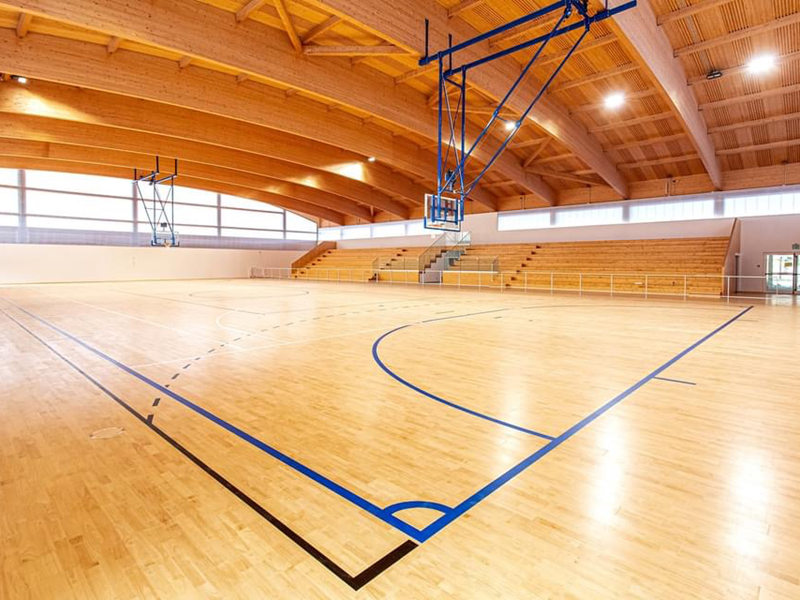
Indoor sports wood flooring has undergone a remarkable evolution over the years, transforming from simple wooden planks to sophisticated, high - performance surfaces designed to meet the rigorous demands of modern sports. The significance of this type of flooring in the realm of indoor sports cannot be overstated, as it plays a crucial role in ensuring the safety, performance, and overall experience of athletes.
In the early days, indoor sports were often played on basic wooden floors that lacked the advanced features of contemporary designs. These floors were prone to warping, cracking, and providing inconsistent bounce, which not only affected the quality of the game but also posed safety risks to players. However, with advancements in materials science and engineering, sports wood flooring has been refined to an art form.
Modern indoor sports wood flooring is typically constructed using multiple layers. The base layer is usually a sub - floor made of materials like concrete or plywood, which provides a stable foundation. On top of this, a layer of shock - absorbing pads or foam is installed to reduce the impact on athletes' joints during high - intensity activities. The top layer, which is the visible part of the floor, is made of high - quality hardwood, such as maple or oak. Maple is a popular choice due to its hardness, durability, and consistent grain pattern, which helps in providing a uniform playing surface.
One of the key benefits of indoor sports wood flooring is its ability to enhance athletic performance. The proper shock absorption and resilience of the floor allow athletes to jump higher, run faster, and change direction more quickly without putting excessive strain on their bodies. This is especially important in sports like basketball, volleyball, and gymnastics, where quick movements and high - impact actions are common.
Safety is another paramount aspect of indoor sports wood flooring. The shock - absorbing properties of the floor help to minimize the risk of injuries such as sprains, fractures, and concussions. In addition, the non - slip surface of the wood flooring provides athletes with better traction, reducing the likelihood of slips and falls.
Furthermore, indoor sports wood flooring has aesthetic appeal. Its natural beauty and warm tones can create a visually appealing environment for both athletes and spectators. This aesthetic quality can also contribute to a positive atmosphere during sports events, enhancing the overall experience for everyone involved.
In conclusion, the evolution of indoor sports wood flooring has been a journey of continuous improvement, driven by the need for better performance, safety, and aesthetics. As sports continue to evolve, so too will the technology and design of indoor sports wood flooring, ensuring that it remains an essential component of any top - notch indoor sports facility.
Leave a Reply