

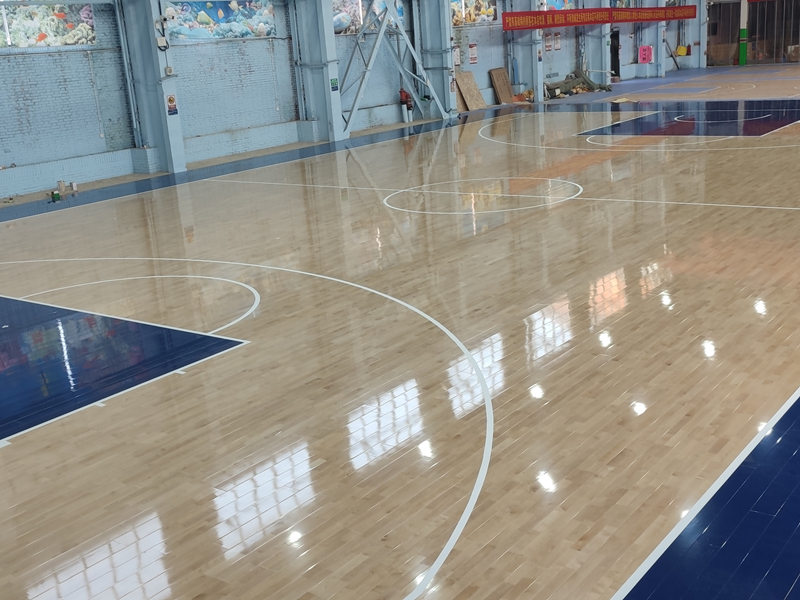
In today's world, sustainability and eco-friendliness are becoming increasingly important considerations for consumers and businesses alike. When it comes to indoor sports wood flooring, there are several ways in which it can be a sustainable and environmentally friendly choice for sports facilities.
Firstly, wood is a renewable resource that can be harvested and replanted, making it a more sustainable option than non-renewable materials such as concrete or synthetic flooring. Many manufacturers of indoor sports wood flooring source their wood from sustainably managed forests, where trees are harvested in a responsible and controlled manner to ensure the long-term health and viability of the forest ecosystem. This helps to reduce the environmental impact of wood flooring production and ensures that future generations will have access to this valuable resource.
In addition to being a renewable resource, wood flooring also has a lower carbon footprint compared to other flooring materials. The production of concrete and synthetic flooring often involves high energy consumption and the release of greenhouse gases, contributing to climate change. Wood flooring, on the other hand, requires less energy to produce and can store carbon dioxide in its fibers, acting as a carbon sink. This means that choosing wood flooring for indoor sports facilities can help to reduce their overall carbon footprint and contribute to a more sustainable future.
Another eco-friendly aspect of indoor sports wood flooring is its durability and longevity. With proper care and maintenance, a wood floor can last for many years, reducing the need for frequent replacement and the associated environmental impact. This is in contrast to some synthetic flooring materials that may need to be replaced more frequently due to wear and tear or damage, leading to increased waste and resource consumption.
Furthermore, at the end of its life, wood flooring can be recycled or repurposed, further reducing its environmental impact. Wood can be used for a variety of purposes, such as fuel, mulch, or even new flooring products, depending on its condition and quality. This closed-loop approach to wood flooring helps to minimize waste and maximize the value of the material.
Finally, many manufacturers of indoor sports wood flooring are also committed to sustainable practices throughout their operations. This may include using eco-friendly adhesives and finishes, reducing water and energy consumption during production, and implementing waste reduction and recycling programs. By choosing a manufacturer that prioritizes sustainability, sports facilities can ensure that their wood flooring is not only high-quality and performance-enhancing but also environmentally responsible.
Leave a Reply