

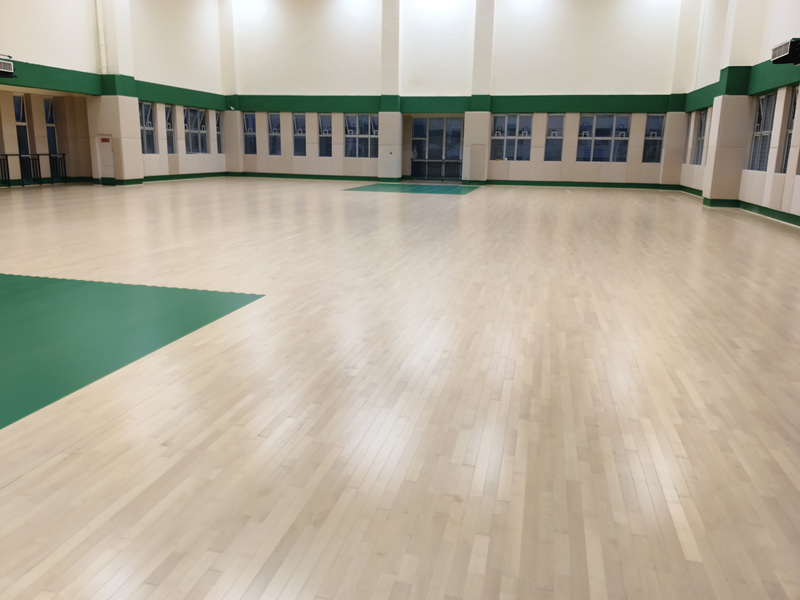
One of the unique advantages of wood flooring in indoor basketball courts is its versatility and customization options. Unlike some other flooring materials that offer limited design choices, wood flooring can be tailored to meet the specific needs and preferences of a facility. Here, we explore the various customization options available for wood flooring in indoor basketball courts.
Firstly, wood flooring can be customized with team logos, colors, and other design elements. This allows facilities to create a personalized and branded playing environment that reflects their identity and pride. Team logos can be inlaid into the wood floor using different colored wood planks or painted onto the surface with durable, high-quality paints. Colors can also be customized to match the team's uniforms or the facility's overall color scheme, creating a cohesive and visually appealing space.
Secondly, wood flooring offers a range of finish options to suit different aesthetic and performance requirements. Facilities can choose from matte, semi-gloss, or high-gloss finishes, depending on their desired look and feel. Matte finishes offer a more subdued and natural appearance, while high-gloss finishes provide a shiny and reflective surface that enhances the visual appeal of the court. Additionally, some finishes offer added benefits such as scratch resistance, stain resistance, and anti-slip properties, further improving the performance and durability of the wood flooring.
Moreover, wood flooring can be customized in terms of its layout and pattern. Facilities can choose from a variety of plank widths, lengths, and orientations to create a unique and visually interesting floor design. For example, some courts may feature a herringbone pattern, while others may opt for a more traditional straight-lay pattern. The layout and pattern of the wood flooring can also be used to define different areas of the court, such as the free-throw line, three-point line, and center circle.
Additionally, wood flooring can be customized to meet specific performance requirements. For example, facilities can choose wood planks with different densities or thicknesses to optimize shock absorption and traction. They can also incorporate specialized underlayments or padding systems to further enhance the flooring's performance characteristics.
Leave a Reply