

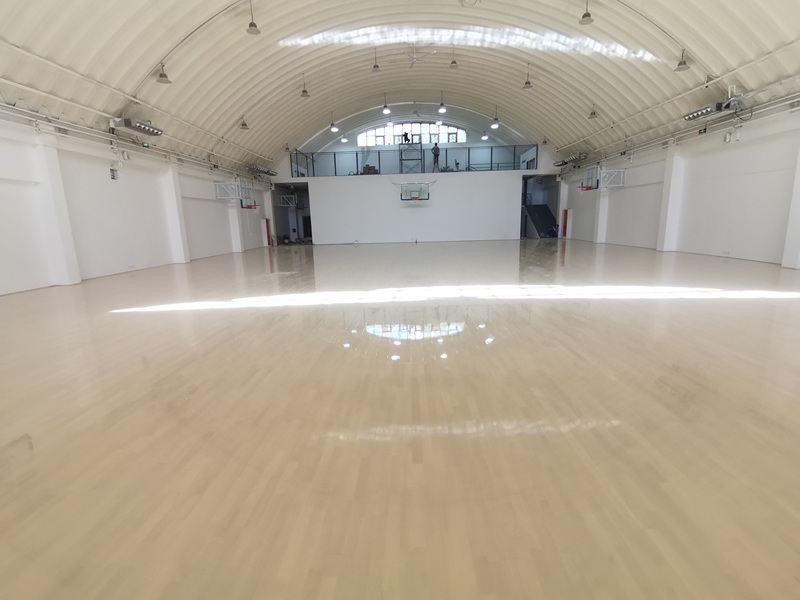
Over the years, sports wood flooring technology has advanced significantly, leading to the development of more durable, resilient, and high-performance surfaces. These advancements have been driven by a combination of materials science, engineering, and design innovations, all aimed at improving the safety, performance, and aesthetics of sports wood flooring. Here are some key advancements in sports wood flooring technology:
- Multi-Layered Construction: Modern sports wood flooring systems often feature a multi-layered construction that includes a subfloor, shock-absorbing pads, and a top layer of hardwood. This multi-layered approach provides enhanced shock absorption, stability, and durability compared to traditional single-layer floors. The subfloor helps to distribute impact forces evenly across the surface, while the shock-absorbing pads cushion the impact of jumps and landings. The hardwood top layer provides a durable, aesthetically pleasing surface that can withstand heavy foot traffic and impact.
- Advanced Subfloor Systems: Subfloor systems have also seen significant advancements in recent years. Many modern subfloors are made from high-density materials like plywood or OSB, which provide superior strength and stability. Additionally, some subfloors incorporate advanced shock-absorbing technologies, such as springs or elastomeric pads, to further enhance their performance. These advanced subfloor systems help to reduce the risk of injuries by providing a more forgiving surface for athletes to land on.
- Improved Finishes and Coatings: The finishes and coatings applied to sports wood flooring have also seen improvements in recent years. Modern finishes are more durable and resistant to wear, scratches, and stains compared to traditional finishes. They also provide better traction and slip resistance, reducing the risk of slips and falls. Additionally, some finishes are designed to be low in VOCs, improving indoor air quality and reducing the environmental impact of the flooring.
- Customization Options: Sports wood flooring can now be customized to meet the specific needs and preferences of sports facilities. This includes incorporating team logos, colors, and other branding elements into the design. Some manufacturers even offer custom shapes and sizes to fit unique spaces or layouts. Additionally, sports wood flooring can be finished with a variety of stains and coatings to match the facility's decor or create a specific aesthetic effect.
- Smart Flooring Technologies: Some sports wood flooring systems now incorporate smart technologies, such as built-in sensors or LED lighting systems. These technologies can provide real-time data on floor usage, impact forces, and other metrics, helping facility managers to optimize maintenance schedules and improve athlete safety. Additionally, LED lighting systems can create dynamic visual effects during games and events, enhancing the spectator experience.
Overall, the advancements in sports wood flooring technology have led to the development of more durable, resilient, and high-performance surfaces that are ideal for modern sports facilities. By incorporating these advancements into their designs, sports facilities can provide a safer, more comfortable, and more aesthetically pleasing environment for athletes and spectators alike.
Leave a Reply