

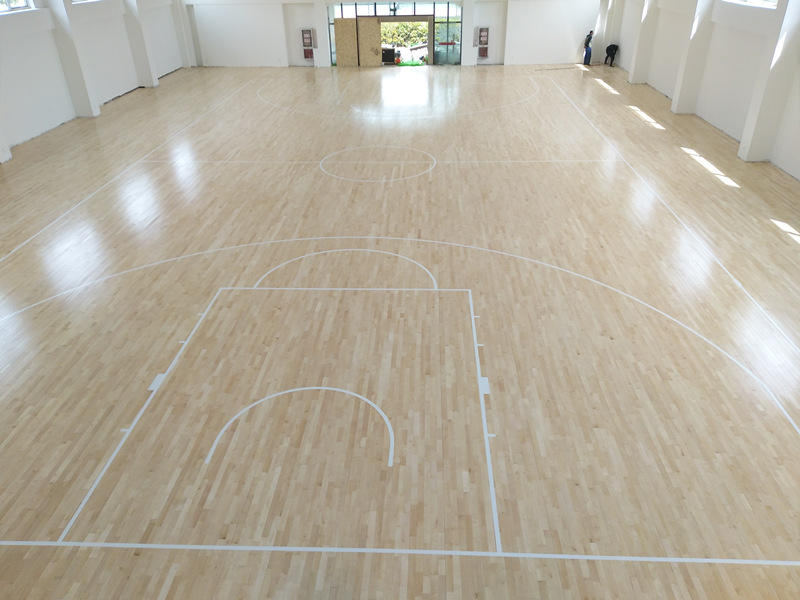
Rubber indoor sports flooring has gained popularity in recent years due to its exceptional safety and durability. Made from recycled rubber or synthetic rubber compounds, these floors are designed to provide a soft, cushioned surface that reduces the risk of injury and extends the lifespan of athletic equipment.
One of the primary benefits of rubber flooring is its shock absorption capabilities. When athletes jump, land, or pivot on a rubber surface, the floor absorbs a significant portion of the impact, reducing the stress on their joints and muscles. This can help prevent common sports injuries like sprains, strains, and fractures, making rubber floors an ideal choice for facilities that cater to young athletes or those with pre-existing conditions.
Rubber floors are also highly durable. They are resistant to wear and tear, able to withstand the constant impact of athletic activity without showing signs of damage. This durability extends to their resistance to chemicals and stains as well, making them easy to clean and maintain. Additionally, rubber floors are water-resistant, which means they can be used in areas prone to moisture, such as locker rooms or shower areas, without the risk of water damage or mold growth.
Another advantage of rubber flooring is its slip resistance. The textured surface of rubber floors provides excellent traction, even when wet, reducing the risk of slips and falls. This is particularly important in sports facilities where athletes are constantly moving and changing direction at high speeds.
Rubber floors are also environmentally friendly. Many rubber floors are made from recycled materials, such as old tires, which helps reduce waste and conserve natural resources. Additionally, the production process for rubber floors is often less energy-intensive than that of other flooring options, further reducing their environmental impact.
In terms of installation, rubber floors are relatively easy to install. They come in interlocking tiles or rolls, which can be quickly and easily laid out over a subfloor. This makes it easy to update or renovate an existing facility without the need for extensive demolition or reconstruction.
Finally, rubber floors offer a variety of aesthetic options. They come in a range of colors and patterns, allowing facility owners to customize their courts to match their brand or team colors. This versatility extends to the thickness of the floor as well, with thicker floors providing more cushioning and thinner floors offering a more traditional feel.
In conclusion, rubber indoor sports flooring is a safe, durable, and environmentally friendly choice for sports facilities. Its shock absorption capabilities, slip resistance, and ease of maintenance make it an ideal surface for athletes of all ages and skill levels.
Leave a Reply