

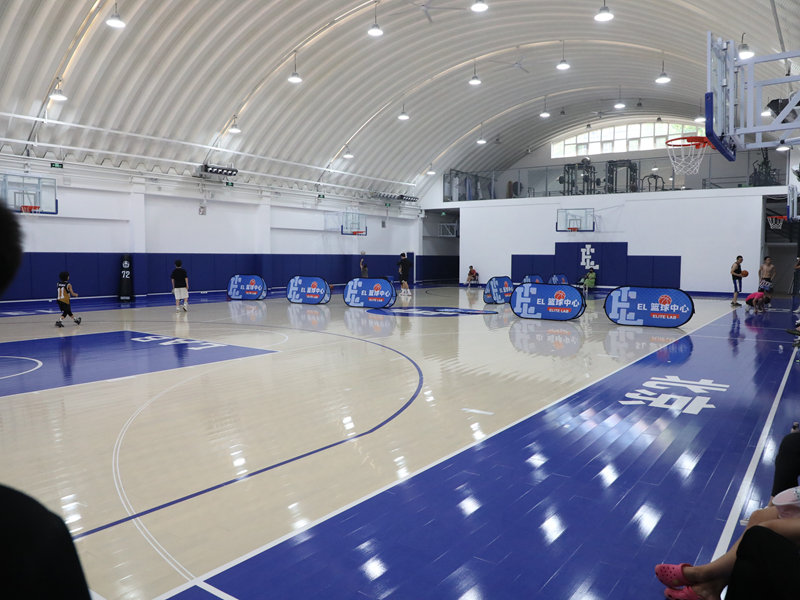
Installing basketball wood flooring is a complex process that requires careful planning, skilled labor, and attention to detail. A proper installation is crucial for ensuring the performance, durability, and safety of the playing surface. Here is a step - by - step guide to the installation process:
Step 1: Site Preparation
Before the installation can begin, the site must be properly prepared. This includes ensuring that the concrete base is level, dry, and free of any cracks or defects. Any unevenness in the concrete can cause problems with the installation and affect the performance of the floor. If necessary, the concrete can be ground or leveled to create a smooth surface.
Step 2: Installation of the Sub - floor System
The sub - floor system is the foundation of the basketball wood flooring. It typically consists of shock - absorbing pads or springs placed between the concrete base and the wooden sleepers. The sleepers are laid out in a grid pattern and secured to the concrete using anchors or adhesives. The spacing and size of the sleepers are carefully calculated to ensure that the floor is stable and has the proper shock - absorption properties.
Step 3: Installation of the Wooden Planks
Once the sub - floor system is in place, the wooden planks can be installed. Maple is the most common choice for basketball wood flooring, and the planks are typically arranged in a tongue - and - groove or finger - jointed pattern. This creates a tight and seamless surface that is resistant to dirt and moisture. The planks are nailed or glued to the sleepers, starting from one end of the court and working towards the other.
Step 4: Sanding and Leveling
After the planks are installed, the surface of the floor is sanded to create a smooth and even finish. This helps to remove any imperfections in the wood and ensure that the floor is level. The sanding process is typically done in multiple stages, starting with a coarse - grit sandpaper and gradually moving to a finer - grit sandpaper.
Step 5: Staining and Finishing
Once the floor is sanded and leveled, it can be stained and finished. Staining is optional and can be used to change the color of the wood to match the team's colors or the overall aesthetic of the facility. After staining, multiple coats of a high - quality finish are applied to protect the wood and enhance its performance. The finish is allowed to dry completely between coats to ensure a durable and long - lasting surface.
Step 6: Line Marking
The final step in the installation process is line marking. The lines on a basketball court, such as the three - point line, free - throw line, and center circle, are painted on the surface of the floor using a specialized paint. The lines must be accurately measured and marked to ensure that they meet the official rules of the game.
In conclusion, installing basketball wood flooring is a multi - step process that requires professional expertise. By following these steps and using high - quality materials, facility owners can ensure that their basketball courts are installed correctly and provide a safe and high - performance playing surface for years to come.
Leave a Reply