

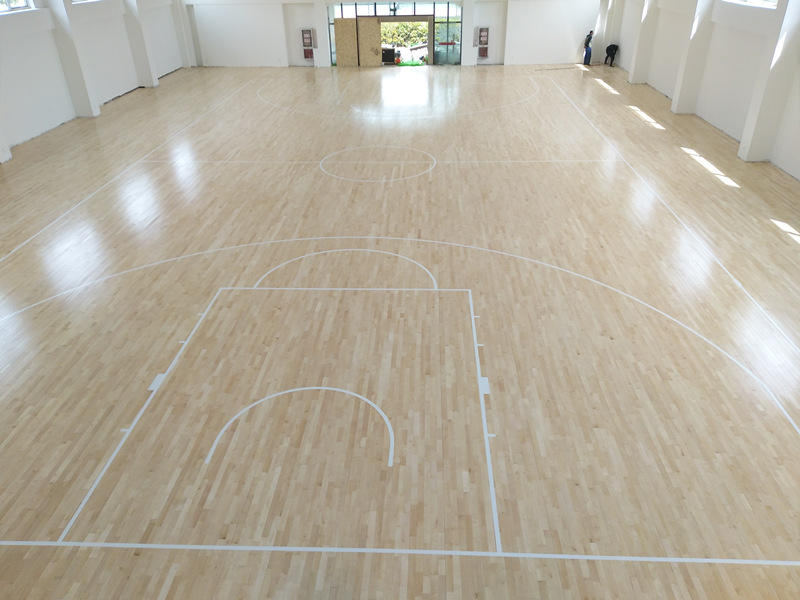
The proper installation of wooden flooring is crucial to ensure its long - term performance and safety in sports venues. Different installation techniques are used depending on the type of subfloor, the requirements of the sports activity, and the desired aesthetic effect.
Floating Installation
Floating installation is a popular method for installing wooden flooring in sports venues, especially when a quick and relatively easy installation is desired. In this method, the wooden planks are not directly attached to the subfloor. Instead, they are connected to each other using a tongue - and - groove or click - lock system. A underlayment is placed between the wooden planks and the subfloor to provide cushioning, sound insulation, and moisture protection. Floating installation allows for some movement of the floor, which can help to accommodate changes in humidity and temperature. However, it may not be suitable for high - impact sports venues where a more stable surface is required.
Glue - Down Installation
Glue - down installation involves attaching the wooden planks directly to the subfloor using a strong adhesive. This method provides a very stable and secure surface, making it ideal for high - traffic and high - impact sports venues. The adhesive helps to prevent the floor from moving or shifting, reducing the risk of injuries and ensuring consistent performance. However, glue - down installation requires a clean and level subfloor, and the adhesive used must be compatible with the wood species and the subfloor material. Additionally, it can be more time - consuming and labor - intensive compared to floating installation.
Nail - Down Installation
Nail - down installation is a traditional method that is still widely used in sports venue flooring. In this method, the wooden planks are nailed to a wooden subfloor, typically made of plywood or OSB (oriented strand board). The nails provide a strong and permanent connection between the planks and the subfloor, creating a stable surface. Nail - down installation allows for some natural movement of the wood, which can help to prevent cracking and splitting. However, it requires skilled labor to ensure that the nails are properly placed and that the floor is level. Additionally, the presence of nails can make future repairs or renovations more challenging.
Subfloor Preparation
Regardless of the installation method chosen, proper subfloor preparation is essential. The subfloor must be clean, dry, and level to ensure a smooth and stable installation. Any imperfections in the subfloor, such as bumps, dips, or cracks, must be repaired before installing the wooden flooring. In some cases, a moisture barrier may be required to prevent moisture from seeping into the wooden planks and causing damage.
Acclimation of Wood
Before installation, the wooden planks must be acclimated to the environment of the sports venue. This involves storing the planks in the venue for a period of time, typically several days, to allow them to adjust to the temperature and humidity levels. Acclimation helps to prevent the wood from expanding or contracting after installation, which could lead to gaps, buckling, or other problems.
Leave a Reply