

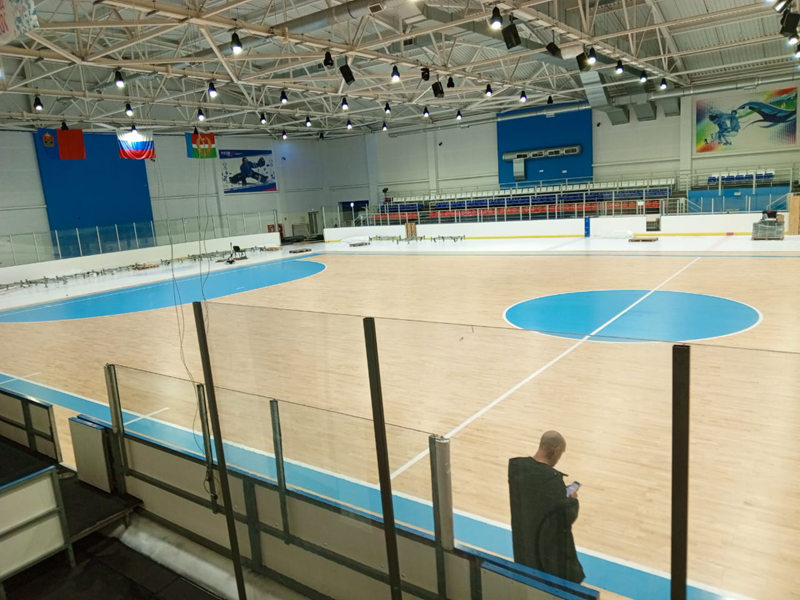
When it comes to choosing sports wood flooring for your athletic facility, there are several different types to consider, each with its own unique characteristics and benefits. In this article, we will compare and contrast some of the most popular types of sports wood flooring to help you determine which one is right for your specific needs and requirements.
Solid Hardwood Flooring: Solid hardwood flooring is made from single pieces of wood, typically maple or oak, and is known for its durability and natural beauty. This type of flooring offers excellent shock absorption and responsiveness, making it ideal for high-impact sports like basketball and volleyball. However, solid hardwood can be more susceptible to moisture damage and warping if not properly maintained, and it may require more frequent refinishing to maintain its appearance.
Engineered Wood Flooring: Engineered wood flooring consists of multiple layers of wood bonded together, with a top layer of hardwood veneer. This design offers improved dimensional stability and resistance to moisture damage compared to solid hardwood, making it a good choice for facilities with varying humidity levels. Engineered wood flooring also tends to be more cost-effective than solid hardwood, while still providing similar performance characteristics.
Floating Subfloor Systems: Floating subfloor systems are designed to provide enhanced shock absorption and resilience by incorporating a series of resilient pads or springs beneath the wooden planks. This type of flooring is ideal for facilities that require maximum shock absorption, such as those hosting high-impact sports or activities involving heavy equipment. Floating subfloor systems can be used with either solid hardwood or engineered wood planks, offering flexibility in design and installation.
Synthetic Sports Flooring: While not technically wood flooring, synthetic sports flooring is worth mentioning as an alternative option for certain applications. Synthetic floors are made from materials like rubber, vinyl, or polyurethane and offer excellent durability, slip resistance, and ease of maintenance. They are often used in facilities that require a multi-purpose surface or where moisture resistance is a primary concern. However, synthetic floors may not provide the same level of shock absorption or responsiveness as wood flooring, making them less suitable for high-impact sports.
In conclusion, choosing the right type of sports wood flooring for your facility depends on several factors, including your budget, performance requirements, and maintenance preferences. By carefully considering these factors and comparing the different options available, you can select a flooring system that meets your specific needs and provides a safe, durable, and high-performance surface for your athletes.
Leave a Reply