

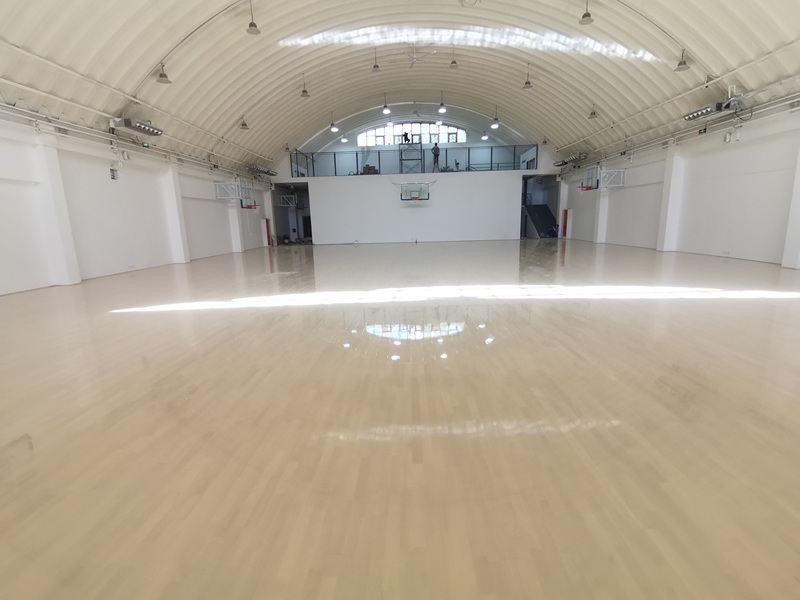
Selecting the appropriate type of wood for indoor basketball court flooring is a critical decision that can significantly impact the performance and longevity of the court. There are several factors to consider when making this choice, including the wood's hardness, stability, and aesthetic qualities.
Hardness is one of the most important factors to consider when choosing wood for basketball court flooring. Harder woods, such as maple and oak, are more resistant to dents and scratches, which can occur from the constant impact of basketball shoes and equipment. These woods also provide better shock absorption, reducing the risk of injuries to players.
Stability is another crucial factor. Wood flooring must be able to withstand changes in temperature and humidity without warping or cupping. This is particularly important in indoor environments where climate control systems may not always maintain perfect conditions. Woods with high dimensional stability, such as maple, are less likely to expand or contract, ensuring a flat and even surface for playing.
Aesthetic qualities also play a role in the selection process. The color and grain pattern of the wood can significantly impact the overall look of the court. Maple, for example, is known for its light, consistent color and fine grain, which creates a clean and professional appearance. Other woods, such as oak or cherry, may have more pronounced grain patterns and darker tones, which can add character and warmth to the space.
In addition to these factors, it's also important to consider the cost and availability of the wood. Some woods may be more expensive or harder to source than others, which can impact the overall budget for the project. Working with a reputable flooring supplier can help ensure that you select a wood that meets your performance, aesthetic, and budgetary requirements.
In summary, choosing the right type of wood for indoor basketball court flooring requires careful consideration of hardness, stability, aesthetic qualities, cost, and availability. By taking these factors into account, you can select a wood that will provide a safe, high-performance surface for basketball players to enjoy for years to come.
Leave a Reply